
How to Get More HVAC Leads from Google Maps in 2025

Fotini Filinis • September 3, 2025

Most HVAC contractors have a Google Maps listing. Few actually generate leads from it. Here's what separates contractors with full calendars from those wondering why their phone doesn't ring.
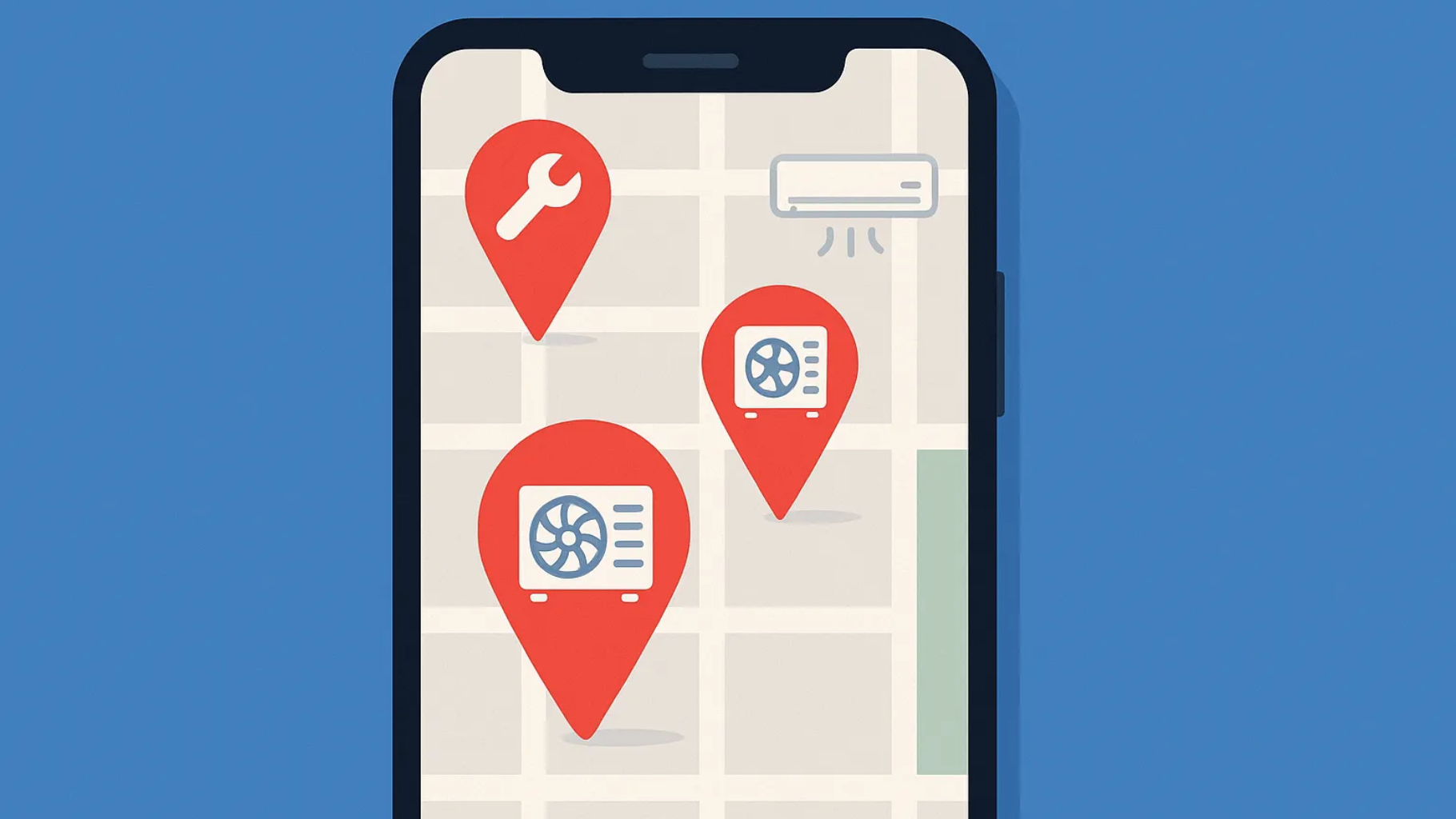
Smartphone screen showing three red location pins on a map, with one pin showing a wrench icon

Most HVAC contractors have a Google Business Profile. Most of them also wonder why their phone isn't ringing. Having a listing and actually generating leads from Google Maps are two completely different things.

I work with HVAC contractors across the country, and the ones crushing it on Google Maps aren't doing anything magical. They're just doing specific things consistently that most contractors ignore. This guide breaks down exactly what works in 2025.


Why Google Maps Matters for HVAC Companies

When someone's air conditioner dies in July or their heat goes out in February, they're not browsing websites for hours. They're pulling out their phone, typing "HVAC repair near me" into Google, and calling the first contractor that looks legitimate.

Here's what most contractors don't realize. Forty six percent of online calls for home service businesses come directly from Google Business Profiles. Not your website. Not Facebook ads. Your Google Maps listing.

If you're not showing up in the top three results when someone searches for HVAC services in your area, you're leaving serious money on the table.


The Reality About Ranking on Google Maps

Let me be straight with you. Ranking on Google Maps isn't a one and done thing. I see contractors all the time who think they can optimize their profile once and forget about it. That's not how this works.

Your competitors are actively working on their rankings. Google's algorithm changes constantly. Customer expectations evolve. If you're not consistently maintaining and improving your Google Maps presence, you're falling behind.

This is an investment, not an expense. The difference matters. An expense is money you spend and never see again. An investment generates returns over time. The contractors who understand this are the ones with full calendars.


7 Strategies That Actually Work in 2025


1. Complete Your Google Business Profile Like Your Business Depends On It

Because it does.

Your Google Business Profile isn't just a listing. It's your digital storefront. Most contractors fill out the bare minimum and wonder why they don't rank. Meanwhile, their competitors are treating every field like it matters.

Your business name: Use your actual registered business name. Don't try to game the system by adding "Best HVAC Company" or keyword stuffing. Google's not stupid, and they'll penalize you for it.

Business category: This matters more than most people think. Set "HVAC Contractor" as your primary category. Then add secondary categories like "Air Conditioning Repair Service" and "Heating Contractor." Each category helps you show up for different searches.

Your business description: This is where most contractors blow it. They write two sentences about being "reliable" and "affordable." That doesn't cut it anymore.

Write a real description that includes what you actually do. Mention your specific services like heating repair, AC installation, and duct cleaning. List the cities and neighborhoods you serve. Tell people how long you've been in business. Explain what makes you different.

Here's what a good description looks like:

"We've been fixing heating and cooling systems in Tampa Bay since 2010. Our licensed technicians handle everything from emergency AC repairs to complete HVAC system installations. We serve Tampa, St. Petersburg, Clearwater, and surrounding areas with 24/7 emergency service. As a Carrier Factory Authorized Dealer, we install energy efficient systems that actually lower your utility bills. Call us at (813) XXX-XXXX for same day service and free estimates on new installations."

See the difference? Specific services. Specific locations. Actual credentials. Real benefits. No fluff.


2. Reviews Aren't Optional Anymore

I'm going to be direct. If you don't have reviews, you don't exist to potential customers. And if you have ten reviews while your competitor has forty, you're losing jobs before customers even call you.

Reviews are the number one ranking factor for Google Maps. Not keywords. Not how long you've been in business. Reviews.

Here's what actually works. You need consistent new reviews. Aim for three to five per month. That signals to Google that you're actively serving customers and they're happy about it.

But quantity isn't everything. A detailed review that says "ABC HVAC came out same day and fixed our broken AC in Tampa. Technician was professional and explained everything" is worth ten reviews that just say "Good service."


How to get reviews without being annoying:

Ask right after you finish excellent work. Not a week later. Not in an email three days later. Right then when the customer is happy their AC is working again.

Send a text with a direct link to your Google review page. Make it brain dead simple. Most people want to leave reviews but they're busy. Don't make them hunt for your business.

Respond to every review within 24 hours. Yes, every one. Thank people for positive reviews and mention the specific service you provided. For negative reviews, apologize and offer to fix the problem offline with a phone number.


3. Post on Your Google Business Profile Weekly

Most contractors set up their profile and never touch it again. Then they wonder why newer companies with worse reviews outrank them. Google wants to see that your business is active. Regular posts signal that you're a functioning business that deserves to rank well.

Post two to three times per week. Mix up your content:

Service updates: Post about specific HVAC services with photos from actual jobs. Before and after photos work especially well.

Seasonal offers: "Spring AC tune ups now available. Get your system checked before summer hits."

Tips and advice: "Is your thermostat in direct sunlight? That's making your AC work harder than it needs to."

Keep posts short. 100 to 150 words max. Add a photo every time. Include a clear call to action like "Call (813) XXX-XXXX to schedule."


4. Target the Right Keywords in Your Content

Keywords matter, but you can't just stuff them everywhere and hope Google doesn't notice.

The contractors who rank well use location specific keywords naturally throughout their profile and website. They're not trying to trick Google. They're just being specific about where they work and what they do.

Use these keyword patterns:

Primary keywords:

  • "HVAC repair [your city]"
  • "AC repair near me"
  • "heating contractor [city]"

Long tail keywords:

  • "24 hour AC repair [city]"
  • "emergency HVAC [city]"
  • "commercial HVAC [city]"

Include these naturally in your business description, posts, and website content. Write for humans first, search engines second.


5. Your Website Needs to Back Up Your Google Maps Presence

Your Google Maps listing and your website work together. You can't ignore one and expect the other to carry all the weight.

Create dedicated pages for each major city you serve. Not one "service areas" page that lists twenty cities. Individual pages with real content about serving each location.

For example, if you serve Tampa, create a page titled "HVAC Services in Tampa, FL" with content specifically about serving Tampa customers. Mention Tampa neighborhoods. Reference common HVAC issues in Tampa's climate. Make it obvious you actually work in Tampa.

Your website needs to load fast. Under three seconds fast. Most plumbing and HVAC websites are bloated with huge images and unnecessary scripts. Compress your images. Remove plugins you don't use. Test your speed with Google PageSpeed Insights and fix what it tells you to fix.

Make sure your website works perfectly on phones. Seventy eight percent of local searches happen on mobile devices. If your site looks like garbage on a phone, you're losing most of your potential leads.


6. Build Citations Consistently

Citations are mentions of your business name, address, and phone number on other websites. Most contractors have never heard of them. The contractors ranking on page one have dozens of them.

Submit your business to these directories:

Angie's List, HomeAdvisor, Better Business Bureau, Yelp, Yellow Pages, your local Chamber of Commerce, and any HVAC specific associations you belong to.

The key is consistency. Use the exact same business name format everywhere. Same address format. Same phone number. If your address is "123 Main Street" on Google, don't write "123 Main St." on Yelp. Google looks at all these mentions and inconsistent information confuses their algorithm.


7. Track What's Actually Working

You can't improve what you don't measure.

Check your Google Business Profile insights every week. Look at how many people viewed your profile, clicked your website link, requested directions, and called your phone number.

You want to see steady growth. If profile views are going up but calls aren't, you have a conversion problem. If calls are steady but you're not booking jobs, you have a sales problem. The data tells you where to focus.

Set real goals. Aim for twenty percent more profile views month over month. Shoot for fifteen percent more website clicks. Track phone calls and see if they're increasing.

Use Google Analytics to see where your website traffic comes from. Use Google Search Console to see what keywords people use to find you. Both tools are free and give you information most contractors completely

ignore.


Common Mistakes That Kill Your Rankings

Let me save you some pain. These are the mistakes I see contractors make over and over:

Keyword stuffing your business name: "ABC Best HVAC Air Conditioning Repair Service Tampa" will get you penalized, not ranked. Use your actual business name.

Inconsistent contact information: If your phone number is different on your website, Google Business Profile, and Yelp, Google doesn't know which one is correct. Pick one number and use it everywhere.

Ignoring negative reviews: Not responding to a one star review tells future customers you don't care about problems. Respond professionally to every review, especially the bad ones.

Buying fake reviews: Google knows. They track review patterns, IP addresses, and account behavior. Fake reviews will tank your rankings when Google catches you, and they always catch you eventually.

Setting up your profile and forgetting it:  Your competitors are posting weekly, getting new reviews, and updating their profiles. If you set it and forget it, you're going to lose.


Frequently Asked Questions


How long does it take to see results from Google Maps optimization?

Be realistic about this. Most HVAC contractors see initial improvements within 30 to 60 days. Real results like more calls and higher rankings typically take 3 to 6 months of consistent work.

This isn't a one month project. You're building long term visibility. The contractors who stick with it for six months to a year see the best returns.


How many Google reviews do I need to rank well?

There's no magic number, but here's what I see working. Contractors with 25 to 40 reviews consistently outrank those with fewer than 15.

More important than the total number is the rate of new reviews. Three to five new reviews per month signals to Google that you're actively doing good work.


Should I pay for Google Ads if I'm optimizing Google Maps?

They serve different purposes. Google Maps optimization gives you long term organic visibility that compounds over time. Google Ads give you immediate visibility but stop the second you stop paying.

Most successful HVAC contractors use both. Ads for immediate leads while you're building your organic presence. Once your Maps ranking is solid, you can reduce ad spend.


How do I compete with big franchise HVAC companies?

Focus on hyper local content. Big franchises can't compete with genuine local expertise. Target specific neighborhoods. Create content about local HVAC issues. Emphasize your personal service and local ownership.

Many customers prefer local contractors over franchises because they want to work with someone who actually lives in their community and will be there long term.


What photos should I add to my Google Business Profile?

Show your actual work. Post photos of your team, your trucks with your company branding, before and after project photos, equipment installations, and your office or shop.

Add new photos every week. Fresh photos signal activity to Google and give potential customers confidence that you're a real, active business.


Stop Leaving Money on the Table

Google Maps is one of the most cost effective ways to generate HVAC leads. No paid ads. No expensive marketing campaigns. Just consistent optimization that builds your visibility month after month.

The contractors making six figures from Google Maps aren't smarter than you. They're just more consistent about maintaining their presence and following the strategies that actually work.

Start with the seven strategies in this guide. Pick two or three to focus on this month. Once those become habits, add more. This is a marathon, not a sprint.


About the Author:

Rocketing Results LLC specializes in Local SEO, web design, and Google Business Profile management for home service contractors. We help HVAC, plumbing, electrical, and roofing businesses dominate local search and generate consistent leads. Contact us for a free consultation.
By Fotini Filinis • September 4, 2026
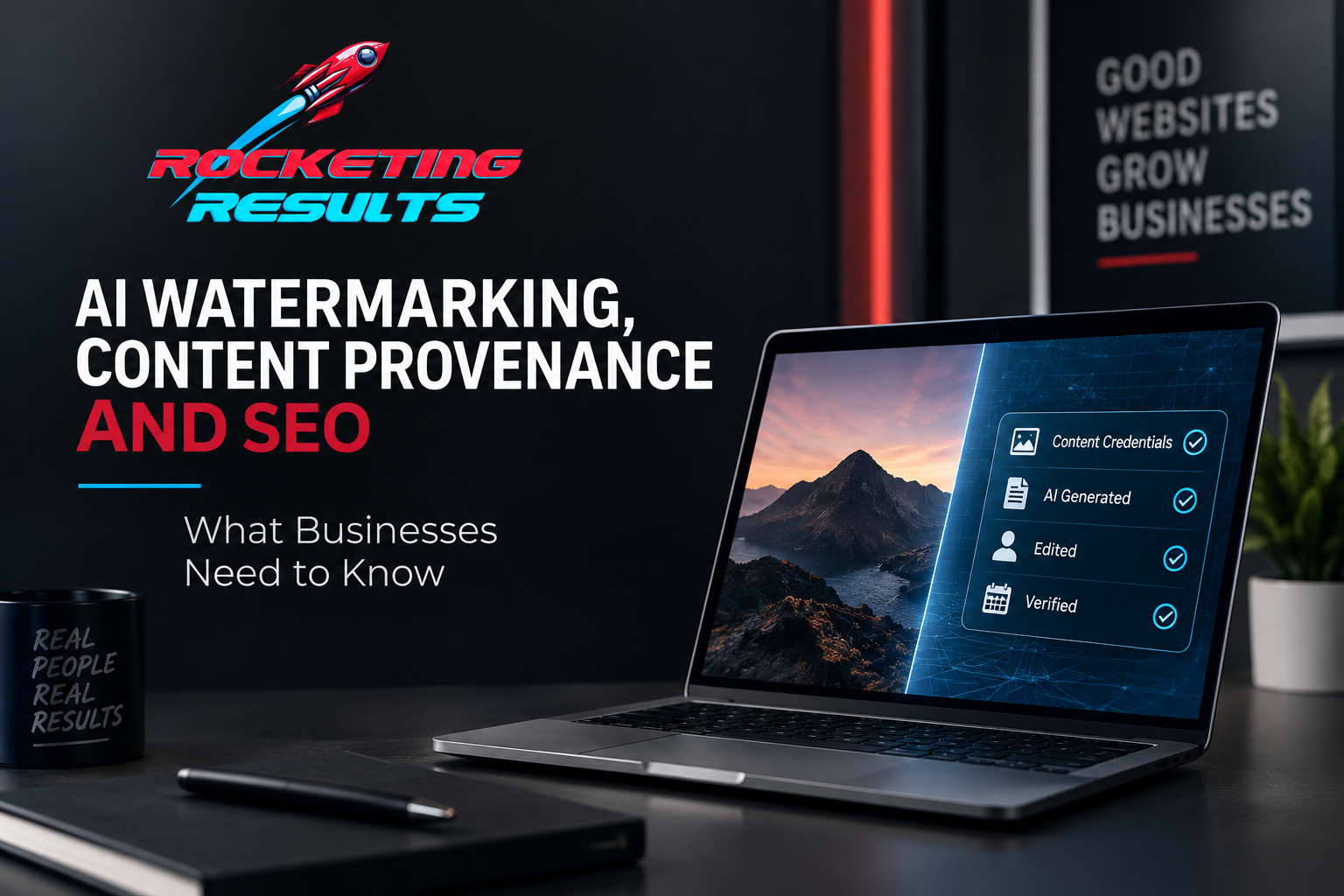
AI is changing how content is created, verified, discovered, and trusted. Here’s what businesses need to understand about AI watermarking, content provenance, and the growing importance of real human expertise in SEO. The key takeaway: AI itself is not the SEO problem. Publishing generic information that adds no original experience, evidence, or expertise is the bigger risk. Businesses that combine AI efficiency with real human knowledge will have a much stronger foundation for both traditional search and AI search. Artificial intelligence has made it possible to research, outline and produce content faster than ever. That has been useful for businesses and marketers, but it has also created a much bigger problem. The internet is filling up with content that looks different but says essentially the same thing. At the same time, technology is getting better at identifying where digital content came from, whether AI was involved and how images, video and other media were created or modified. This is where terms such as AI watermarking and content provenance come in. For business owners, the important question is not whether you should stop using AI. It is whether your content contains enough real knowledge, experience and original information to be worth finding, trusting and citing. What Is AI Watermarking? AI watermarking is a method of embedding information or a detectable signal into content created by artificial intelligence. Depending on the technology, that signal may be contained in metadata or embedded more deeply within an image, video, audio file or generated text. The purpose is generally to provide information about the origin of the content or help identify that AI was involved in creating it. One example is Google’s SynthID technology, which has been developed to identify certain AI-generated media. Another important development is C2PA, or the Coalition for Content Provenance and Authenticity. C2PA supports what are commonly called Content Credentials . Instead of simply labeling something “AI generated,” Content Credentials can provide information about where a piece of digital media originated and how it was edited. Think of it less like a visible watermark across a photograph and more like a digital record attached to the content. What Is Content Provenance? Content provenance is essentially the history of digital content. It can help establish information such as: where content originated what created it whether it was edited what tools were involved whether certain information about its origin can be verified This matters because the internet increasingly has an authenticity problem. Someone can create a realistic photograph of an event that never happened. A company can publish hundreds of articles without anyone at that company having experience with the subject. A website can summarize another ten websites and produce what appears to be a completely new article. Technically, the content may be new. Informationally, it may contribute almost nothing. That distinction is becoming increasingly important for search. Does Google Penalize AI-Generated Content? Not simply because AI was used. Google’s published guidance does not say that content receives a ranking penalty merely because artificial intelligence helped create it. Google says generative AI can be useful for research and for adding structure to original content. The problem is using automation to produce large amounts of content without adding meaningful value. That can fall under Google’s policies concerning scaled content abuse. In other words, the issue is not: Human content good. AI content bad. The better distinction is: Useful, original content versus mass-produced commodity content. That applies whether the person pressing the publish button used ChatGPT, hired a writer or wrote every word personally. Google’s Newer AI Search Guidance Makes the Direction Clear Search itself is also changing. Google Search now includes generative AI experiences that can pull information from multiple websites, synthesize it and present an answer directly to the searcher. That changes what publishers are competing for. Traditionally, the goal of SEO was largely: Get the webpage to rank. That is still important, but another objective is emerging: Create information that search systems consider useful enough to retrieve, reference and potentially cite. Google’s current guidance for appearing in generative AI Search emphasizes creating unique, useful and non-commodity content. That last term matters. Commodity content is information that could come from practically anyone. For example: “5 Reasons You Need an Electrician” “10 Benefits of Local SEO” “7 Signs You Need a New Roof” Those articles are not automatically bad. The problem is that thousands of websites can produce almost identical versions of them. AI makes that dramatically easier. The Real SEO Threat Is Not the AI Watermark Businesses are understandably worried about Google detecting that AI helped create something. I think that concern is focusing on the wrong problem. The much larger SEO risk is publishing content that gives Google or an AI search system no compelling reason to choose your website over another source. Consider two electricians publishing an article about electrical panel problems. The first article says: Flickering lights, tripped breakers and older electrical panels can sometimes indicate electrical problems. Contact a licensed electrician for an inspection. Accurate enough. But thousands of websites already say essentially the same thing. The second electrician explains: A problem he repeatedly encounters in homes built during a certain period. What he discovers when he removes the panel cover. A common repair homeowners attempt before calling him. What he found during an actual service call. Photographs from the job. The circumstances under which he recommends repair versus replacement. Now there is something different. That information originated from experience. AI can help organize that knowledge into an article, but AI did not manufacture the experience. That is the difference businesses need to understand. Human Experience Is Becoming More Valuable, Not Less AI has made average content inexpensive. That means information that cannot easily be generated from existing internet content becomes more valuable. For a local business, some of the best source material already exists inside the owner’s head. A contractor knows: What customers misunderstand. What problems repeatedly appear in homes around the area. Which cheap repairs usually create bigger problems. What customers commonly ask during estimates. What actually affects project pricing. What certain problems look like once the wall, roof, panel or equipment is opened. What happens on jobs that does not match the textbook explanation. That information can become extremely strong search content. The challenge is extracting it. A Better Way to Use AI for SEO Content The old AI content workflow looks something like this: Choose keyword → ask AI for article → edit article → publish That workflow is fast. It also makes it extremely easy to publish the same information everyone else is publishing. A stronger workflow starts somewhere else. Step 1: Capture the Human Source Before writing the article, collect information from the person who actually knows the subject. For a contractor, I might ask: What happened the last time you encountered this problem? What do homeowners usually get wrong? What would make you recommend one solution instead of another? Are there particular homes or properties where you see this more frequently? What should someone never attempt themselves? Can you show me a photograph? What would you tell the homeowner if you were standing in the house with them? Those answers become the raw material. Step 2: Verify the Facts Experience is valuable, but experience and factual accuracy are not always the same thing. Important technical, legal, safety or regulatory claims should still be verified against authoritative sources. AI can assist with research, but it should not be treated as the final authority. Step 3: Use AI for Speed Now AI becomes useful. It can help: Organize the interview. Identify questions the article should answer. Develop headings. Compare the information with common search intent. Create an initial structure. Identify areas that need additional explanation. Improve readability. Generate possible FAQs. The human expertise remains the source. AI becomes the production tool. Step 4: Add Evidence Whenever practical, strengthen the page with evidence. This might include: Original photographs. Screenshots. Examples. Before-and-after situations. Actual customer questions. Owner quotations. Original research. Local observations. Case studies. Data. Supporting sources. This creates something much harder to reproduce. Step 5: Perform a Human Editorial Review Before publishing, someone who understands both the business and the purpose of the article should review it. Ask: Is this accurate? Does this sound like the business? Did we say anything we cannot support? Does this actually teach someone something? Did we contribute information that is not already repeated across hundreds of websites? Would I trust this company more after reading it? If the answers are no, the article is not finished. Write Content Worth Citing There is another question businesses should begin asking. What is in this article that another source would actually want to cite? That question becomes increasingly important as people use Google AI experiences, ChatGPT and other AI systems to research businesses, services and purchasing decisions. An article does not become a good AI-search source because someone added the phrase “AI optimized.” It becomes useful when it contains information worth retrieving. Original statistics are worth citing. First-hand observations can be worth citing. Expert explanations can be worth citing. Detailed case studies can be worth citing. Original research can be worth citing. A rewritten summary of the first ten Google results usually is not. This is also why businesses need to think beyond traditional rankings. In our guide on why your website may not be showing up in AI search , we explain how content structure, authority, clarity, and useful source information can influence whether AI systems can understand and retrieve information from a website. Should Businesses Try to Remove AI Watermarks? I would not make that part of a marketing strategy. Some provenance information can be lost when media is converted, edited or passed through systems that do not preserve metadata. Other technologies are specifically designed to remain detectable after certain modifications. But trying to conceal how content was created solves the wrong problem. Even if every indication of AI involvement disappeared tomorrow, a generic article would still be generic. The stronger strategy is making the content valuable regardless of what production tools were used. If artificial intelligence helped organize a contractor’s real experience into a useful article, the AI assistance is not the interesting part. The contractor’s knowledge is. What Business Owners Should Do Now Businesses do not need to stop using AI. They should stop using AI as a substitute for having something to say. Use it to work faster. Use it to organize information. Use it to find gaps. Use it to assist research. Use it to improve structure. But build important content from information that belongs to the business itself. That could be experience, opinions, data, photographs, projects, processes, customer questions or lessons learned in the field. The more AI-generated information floods the web, the more valuable authentic source material becomes. What This Means for Local SEO For local businesses, this is actually an opportunity. A national publishing company may be able to create 500 articles about plumbing. It cannot recreate what a plumber who has worked inside hundreds of homes in Pinellas County knows about the homes he services. A generic marketing website can publish hundreds of articles about Google Business Profiles. It cannot reproduce the lessons learned from actually managing local businesses, rebuilding websites, diagnosing visibility problems and watching what happens afterward. That is where small businesses can compete. The goal is no longer simply producing more content. The goal is producing information that could only reasonably have come from the business publishing it. AI Should Increase Your Output, Not Replace Your Expertise Artificial intelligence is going to remain part of marketing. Watermarking and provenance technologies will continue developing. Search engines will continue getting better at understanding content. Trying to hide from those developments is a weak long-term strategy. Businesses should be doing the opposite. Create content where the source is obvious. Attach real people to the knowledge. Document experience. Show the work. Support claims. Contribute something original. Then use AI to help communicate that expertise more efficiently. AI can make content faster. Human experience is what can make that content worth finding, trusting and citing. Related Reading: Why Your Website Isn’t Showing Up in AI Search and How to Fix It About the Author Fotini Filinis is the owner of Rocketing Results LLC, where she works directly with small businesses on website design, Local SEO, Google Business Profile optimization, and improving visibility across traditional and AI-driven search. Her work focuses on helping businesses build stronger online visibility with useful content, clear site structure, and real business expertise rather than mass-produced marketing content.
By Fotini Filinis • August 1, 2026
Learn why Google AI, ChatGPT, Gemini, and other AI search tools may not recommend your website and what you can do to improve visibility.
Laptop on wooden desk displaying rising analytics chart, with phone, notebook, and soft blue workspace lighting.
By Fotini Filinis • June 26, 2026
Google’s new Gemini tools can simplify Google Business Profile management, but can they replace Local SEO? Learn what AI can and cannot do.
Dark, weathered brick wall with a black grunge texture.
By Rocketing Results LLC • March 26, 2026
Enhance your contractor marketing with local SEO & conversion-focused web design. Contact Rocketing Results LLC for expert lead generation!
Dark, weathered brick wall with a black grunge texture.
By Rocketing Results LLC • February 27, 2026
Most local business owners make these 5 SEO mistakes. Learn what they are and how to fix them to rank higher on Google.
Why Most Tampa Contractor Websites Fail to Generate Leads (And How to Fix Yours)
By Fotini Filinis • December 8, 2025
Most Tampa contractor websites look professional but don't generate leads. Here's why your HVAC, plumbing, electrical, or roofing website isn't getting calls and exactly how to fix it.